
LEAVING HOME: HARDSHIP, LOSS AND THE EXODUS FROM THE YANKTON SIOUX RESERVATION
From a Vast Dakota Homeland to Families Leaving Marty and Wagner for Yankton
Nation: Yankton Sioux Tribe — Ihanktonwan OyateRegion: Southeastern South DakotaCommunities: Marty, Wagner and YanktonPrimary Issues: Land Loss, Housing, Employment, Addiction, Poverty and Population LossReporting: Imperial News Network
Across the rolling prairie of southeastern South Dakota, the Yankton Sioux Tribe — the Ihanktonwan Oyate — continues to maintain its homeland along the Missouri River despite generations of land loss, economic hardship and social disruption.
The reservation that exists today represents only a fraction of the land once occupied and used by the Yankton Sioux.
Historically, the Ihanktonwan were part of the larger Oceti Sakowin, the Seven Council Fires, and lived across an extensive territory of the northern Plains.
That world was dramatically reduced during the nineteenth century.
Under the 1858 Treaty of Washington, the Yankton ceded approximately 11 million acres to the United States while retaining a reservation of roughly 475,000 acres along the Missouri River in southeastern South Dakota.
Even that remaining land base would not remain intact.
Federal allotment policies divided reservation lands into individual parcels and contributed to additional land passing out of Native ownership. Over succeeding generations, the reservation became an increasingly complicated checkerboard of tribal, allotted and non-Native land.
Former Yankton Sioux Tribal Chairman Thurman Cournoyer Sr. later described a nation whose original reservation encompassed hundreds of thousands of acres but whose tribal land base had been reduced to roughly 40,000 acres scattered throughout the reservation. Pasted markdown
That history matters because the difficulties facing Marty and Wagner did not begin with the current generation.
The Ihanktonwan went from possessing an enormous homeland capable of sustaining a nation to maintaining their community on a drastically reduced and fragmented land base.
Today, the consequences can be seen in another kind of loss.
This time, it is not simply land leaving tribal hands.
It is people leaving home.
MARTY AND WAGNER
Communities at the Center of Reservation Life
Marty and Wagner remain important centers of life for the Yankton Sioux Tribe.
Marty is home to Marty Indian School, while Wagner contains tribal government offices and important housing, social-service and community institutions.
These communities are more than dots on a map.
They contain relatives, childhood memories, tribal institutions, ceremonies and connections to the land that cannot simply be recreated somewhere else.
But having a homeland does not necessarily mean having everything required to build a life there.
For some Ihanktonwan families, the problem is increasingly practical.
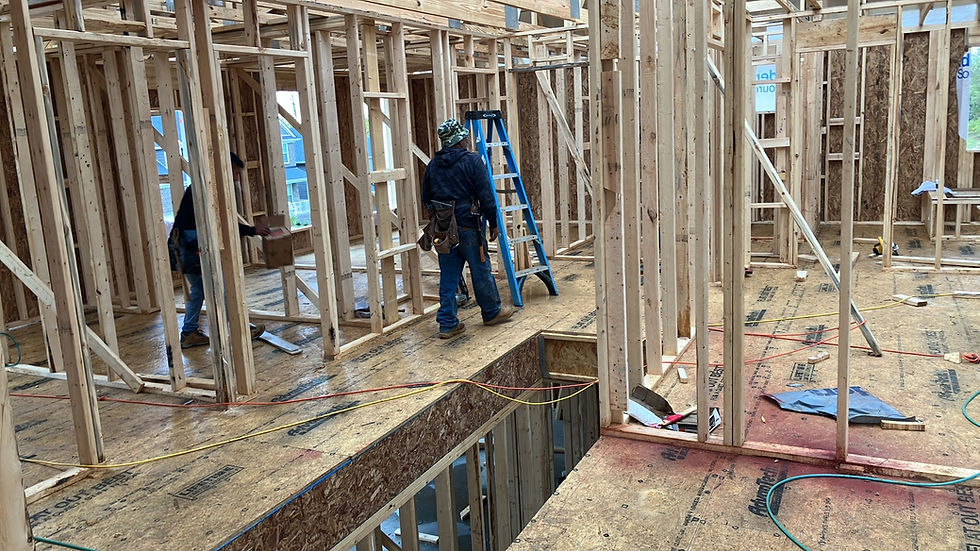
There are not enough houses.
Employment opportunities are limited.
Businesses and services are limited.
Addiction and poverty place additional pressure on families already struggling to remain stable.
And only a relatively short drive away sits Yankton, a larger city offering more employment, housing, shopping, health care and other services.
For some families, that makes leaving Marty or Wagner a practical decision rather than a rejection of their home or their people.
There is no reliable public statistic establishing exactly how many Yankton Sioux families have made the specific move from Marty or Wagner to Yankton.
But the conditions that can push families away are documented. Pasted markdown
FROM LAND LOSS TO POPULATION LOSS
A Different Threat to the Homeland
For the Ihanktonwan, movement away from the reservation carries historical weight.
For generations, outside forces reduced the Yankton Sioux land base.
Today, a different problem confronts the nation:
How do you keep your people living on what remains?
When a young couple cannot find a house, they may leave.
When a parent cannot find adequate employment, the family may leave.
When shopping, medical care or other essential services require repeated trips elsewhere, another incentive exists to relocate.
Leaving does not mean those people cease being Yankton Sioux.
Nor does it necessarily mean they wanted to leave.
For some, moving to Yankton can represent a compromise — seeking greater economic stability while remaining close enough to Marty and Wagner to maintain relationships with relatives, community and the Tribe.
But the cumulative effect still matters.
A Native nation needs more than territory.
It needs people living on that territory, raising families, spending money locally, working in tribal institutions, teaching children and transmitting culture from one generation to the next.
The modern struggle of the Yankton Sioux Reservation is therefore connected to its history in an uncomfortable way.
The nineteenth century was a struggle to retain the land.
The twenty-first century includes a struggle to make it possible for the people to remain on it. Pasted markdown
A SHORTAGE OF HOUSING
When There Is Nowhere to Live
The housing problem is not anecdotal.
The Yankton Sioux Housing Authority describes a “critical shortage of housing” for enrolled members of the Yankton Sioux Tribe.
The Housing Authority has also closed its low-income rental waiting list because of limited availability.
A detailed housing-needs assessment found that the Housing Authority managed only 287 housing units at the time studied, almost all of them rentals, while documenting extended periods with little new housing development.
For a young person growing up in Marty or Wagner, that creates a fundamental problem.
You can love your community.
You can want your children to grow up near grandparents, cousins and tribal traditions.
But you still need somewhere to live.
When adequate housing cannot be found on the reservation, leaving becomes less a rejection of home than a practical necessity. Pasted markdown
LEAVING FOR YANKTON
Opportunity Exists Down the Road
The city of Yankton sits outside the reservation, but it is close enough that relocating there does not require leaving southeastern South Dakota entirely.
That makes Yankton a logical destination for some people seeking what is difficult to find in smaller reservation communities:
Employment. Housing. Stores. Health care. Restaurants. Transportation. Schools and other services.
For a family struggling in Marty or Wagner, moving to Yankton can offer access to opportunities while keeping the reservation, relatives and tribal community within driving distance.
These are not necessarily people who want to leave the Ihanktonwan community behind.
They are people looking for what almost every family wants — a decent house, reliable employment, accessible services and a stable environment in which to raise children.
When those necessities are difficult to obtain at home, geography begins making the decision. Pasted markdown
WHAT HAPPENS WHEN FAMILIES LEAVE?
The Reservation Loses More Than Population
Every family that leaves takes something with it.
Children who might once have grown up surrounded daily by grandparents, cousins, aunts and uncles can instead experience reservation life primarily through visits.
Young adults who could eventually become teachers, tradespeople, business owners, health workers or tribal employees establish careers somewhere else.
Money earned elsewhere is increasingly spent elsewhere.
Over time, a community can enter a destructive cycle:
Limited opportunities encourage people to leave.
People leaving reduces the local population and economic base.
A smaller economic base makes attracting businesses and services more difficult.
The lack of businesses and services gives the next generation another reason to leave.
Breaking that cycle requires more than asking young people to remain loyal to their homeland.
It requires giving them a realistic way to remain there. Pasted markdown
ADDICTION AND FAMILY INSTABILITY
Problems That Reach the Next Generation
Economic hardship is only one part of the story.
Substance abuse has affected families throughout the reservation for years.
Former Chairman Thurman Cournoyer publicly identified methamphetamine as a serious problem facing his people during his time in tribal leadership.
The consequences of addiction reach far beyond the person using drugs.
Children can experience unstable households, incarceration of parents, movement between relatives and disruption to their education.
South Dakota News Watch documented the experience of Yankton Sioux member Alexander “Zane” Zephier, whose mother struggled with addiction while his father was incarcerated.
Zephier lived with his grandmother and younger siblings and attended schools in Lake Andes, Marty and Wagner while navigating those circumstances.
His story illustrates why the difficulties confronting reservation children cannot be understood simply by looking at what happens inside a classroom.
Housing, addiction, incarceration, employment and family stability intersect.
Moving away can change a family's surroundings.
It does not automatically erase the problems that caused the family to leave. Pasted markdown
EDUCATION AND MARTY INDIAN SCHOOL
Keeping Children Connected to Their Culture
Marty Indian School occupies an important place in the history and future of the Yankton Sioux Tribe.
Today, it is a tribally controlled school incorporating Native history, culture and tribal government into education.
But the institution has a complicated history.
Before coming under tribal control, it operated as St. Paul's Marty Mission, part of the larger system of Native American boarding schools.
Former students have publicly described abuse associated with the boarding-school era.
Eventually, control of the school passed to the Yankton Sioux Tribe.
That transformation carries enormous symbolic importance.
An institution once associated with assimilation became an institution through which the Tribe could educate its own children.
But maintaining a tribal school also requires maintaining a community of families whose children can attend it.
If families continually leave the reservation in search of housing and opportunity, education and population become connected problems.
Keeping children connected to their culture requires making it possible for their families to remain connected to the homeland. Pasted markdown
POVERTY, INFRASTRUCTURE AND SERVICES
The Problems Do Not Exist Separately
The reservation has faced serious infrastructure challenges as well.
Flooding in 2019 affected communities across the reservation, including Marty, Wagner and Lake Andes, damaging roads, homes and tribal housing.
Health-care access has also been a recurring concern, with tribal leaders over the years fighting to maintain and improve medical services available locally.
Transportation presents another challenge in a rural area where reaching work, medical appointments, stores or government services can require significant travel.
None of these problems exists independently.
A shortage of housing affects whether workers can remain.
Limited employment affects whether businesses can survive.
A lack of businesses means residents spend money outside the reservation.
Transportation problems make distant services harder to reach.
Addiction can destabilize families already under economic pressure.
And each problem can become another reason for somebody to leave. Pasted markdown
THE LOSS OF THURMAN COURNOYER
A Former Chairman Who Chose to Come Home
Against those continuing challenges, the Ihanktonwan community has also experienced the deaths of members of an older generation who remembered a very different reservation.
Thurman Cournoyer Sr. was a Yankton Sioux tribal member, United States Navy veteran, electrician, father and former Chairman of the Yankton Sioux Tribe.
He grew up on the reservation and attended school at Marty.
At 17, he joined the United States Navy.
He later returned to South Dakota, became a journeyman electrician, raised a large family and eventually entered tribal politics.
Cournoyer was elected Chairman of the Yankton Sioux Tribe in 2011.
During his leadership, he spoke publicly about addiction, law enforcement, economic development and improving conditions for tribal families.
He also spoke about the importance of serving as a role model for younger generations.
Thurman Cournoyer Sr. died October 6, 2023, at his home in Marty at the age of 79.
He was buried at St. Paul's Catholic Cemetery with military honors.
His death represented more than the loss of a former elected official.
It marked the passing of a man who had lived through decades of transformation on the Yankton Sioux Reservation and who had returned home to serve his people. Pasted markdown
THE DEATH OF MARLENE COURNOYER DIETRICH
Another Link to an Older Generation
Another loss followed in 2026.
Marlene Rose Cournoyer Dietrich was born December 13, 1938, one of the children of Harold and Hazel Flood Cournoyer and a sister of Thurman Cournoyer Sr.
She belonged to a generation whose lives stretched across enormous changes in Native life in South Dakota.
Marlene died August 28, 2026, at the age of 87.
Her funeral was held at the Yankton Sioux Tribe South Gym in Wagner, with traditional wake services held there during the preceding days.
In small Native communities, the deaths of elders carry consequences that extend beyond individual families.
Elders can represent living connections between generations.
They remember relatives who are now only names to younger people.
They remember what communities looked like before modern development.
They carry family stories, cultural knowledge and memories that cannot be reconstructed once they disappear.
The deaths of Thurman and Marlene therefore represent part of a larger transition occurring within the Ihanktonwan community.
One generation is passing.
Another must decide whether it can build its future at home. Pasted markdown
THE REAL QUESTION IS WHETHER PEOPLE CAN COME HOME
The problems confronting the Yankton Sioux Reservation cannot be reduced to one cause.
They involve the consequences of historic land loss, poverty, housing shortages, limited employment, addiction, infrastructure problems and inadequate access to services.
But hardship does not define the Ihanktonwan people.
Marty Indian School remains under tribal control.
The Yankton Sioux Tribe continues operating government, housing, health, education, child-welfare and community programs.
Organizations continue working with children in Marty and Wagner.
Tribal programs continue confronting addiction and attempting to incorporate Dakota culture into prevention and recovery.
Families continue raising children on the same homeland their ancestors fought to preserve.
But the fundamental challenge remains.
Can the reservation offer enough housing, employment and opportunity for the next generation to stay?
For more than a century, the history of the Yankton Sioux was shaped by the loss of land.
The modern challenge is ensuring that economic hardship does not produce another form of loss — the gradual departure of the people themselves.
People will always move.
Some will establish lives in Yankton, Sioux Falls or much farther away.
Some will return.
The goal cannot realistically be preventing every person from leaving.
The deeper issue is making sure leaving is a choice rather than something forced by the absence of opportunity at home.
Because preserving a nation requires more than preserving its government.
It requires more than preserving its borders.
And it requires more than remembering the land that was lost.
It requires creating a homeland where the people can afford to remain. Pasted markdown
IMPERIAL NEWS NETWORK
INN | INDIGENOUS AFFAIRS




Comments