
Building Kentucky: Mexican Workers, Growing Communities and Life Under the Shadow of ICE
From Louisville construction sites to Lexington cultural festivals, Mexican immigrants have become part of Kentucky’s workforce and community. For some families, increased immigration enforcement has added uncertainty to everyday life.
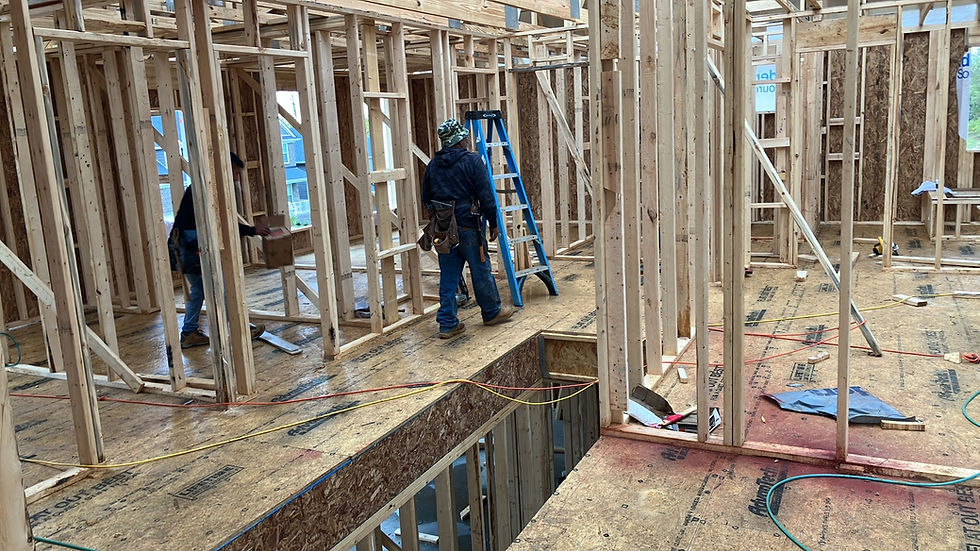
LOUISVILLE, Ky. — Across Louisville, new apartment buildings and subdivisions continue to rise. Crews frame houses, hang drywall, replace roofs and pour concrete. Among the workers helping build them are immigrants from Mexico and other parts of Latin America.
Their presence reflects a broader change in Kentucky’s workforce.
Immigrants make up about 12 percent of Kentucky’s construction workforce, according to economic analysis cited by the Kentucky Center for Economic Policy. In the Louisville metropolitan area, foreign-born residents accounted for 9.7 percent of employed workers in 2024, according to Louisville Metro Government.
Construction is among the industries where immigrant labor has become particularly visible, alongside manufacturing, hospitality, food service and other sectors.
The numbers encompass immigrants with many different legal circumstances. Kentucky’s Mexican population includes U.S. citizens, naturalized citizens, permanent residents, people holding temporary visas and immigrants without legal status.
For workers without permanent legal status — and for families containing relatives with different immigration statuses — the increased visibility of federal immigration enforcement has brought another concern into daily life.
Enforcement brings uncertainty
U.S. Immigration and Customs Enforcement has increased enforcement activity in Kentucky as the Trump administration has expanded immigration enforcement nationally.
An analysis of federal data published by the Kentucky Lantern and other Kentucky news outlets reported thousands of ICE arrests associated with the agency’s Louisville and Bowling Green offices following President Donald Trump’s return to office in January 2025.
In Louisville, changes involving cooperation between Metro Corrections and federal immigration authorities have also drawn attention from immigration advocates.
The American Civil Liberties Union of Kentucky reported a sharp increase in ICE detainer requests following a change in Louisville Metro Corrections policy. ICE detainers ask local authorities to hold certain people so federal immigration officers can potentially take them into custody.
Federal officials say immigration enforcement is necessary to enforce existing law, remove people who are unlawfully present in the country and prioritize public safety and national security.
For immigrant families, however, enforcement actions can have consequences beyond the individual who is arrested.
A household may include an undocumented parent, a legally present spouse and U.S.-citizen children. An arrest or detention can therefore leave families suddenly dealing with child care, housing payments, transportation and the loss of a primary wage earner.
The possibility of enforcement has also created anxiety outside Louisville.
After reports of ICE activity circulated in Lexington in February 2026, immigration attorney Kate Miller told WKYT that her office received numerous messages from worried clients and employers seeking information about what was happening.
For workers, that uncertainty can accompany otherwise routine activities: driving to a construction site, taking children to school, appearing in court or returning home after a shift.
Crime and immigration
Crime has become one of the most prominent issues in the national immigration debate, particularly in arguments for expanded deportations and border enforcement.
Individual immigrants do commit crimes, as members of any large population do. Available research, however, does not show that immigrants collectively commit crimes at higher rates than people born in the United States.
A National Institute of Justice-funded study examining unauthorized immigration and crime found no significant relationship between estimated unauthorized immigrant populations and arrest rates after researchers accounted for other factors.
A separate National Bureau of Economic Research study examining more than a century of U.S. incarceration data found immigrants have historically been incarcerated at lower rates than U.S.-born Americans.
The distinction is important in Kentucky, where immigration enforcement, public safety and the state's demand for workers increasingly intersect.
For employers, the issue can also be economic. Construction remains dependent on a workforce capable of meeting demand for new homes, apartments, renovations and infrastructure.
The result is a complicated reality: some of the same immigrant communities affected by enforcement are also supplying labor to industries Kentucky depends upon.
A visible part of Louisville
Away from the immigration debate, Mexican and Latino culture has become increasingly visible in Louisville's public life.
Louisville Metro estimated its foreign-born population at roughly 79,000 in a recent community snapshot, with nearly half of those residents naturalized U.S. citizens.
Each Labor Day weekend, thousands gather downtown for WorldFest, Louisville's large international cultural festival. The event includes a Parade of Cultures, international food vendors, music and performances representing communities from around the world.
The city also recognizes Welcoming Month and Hispanic Heritage Month, during which community organizations host cultural events and programs.
Mexican-owned restaurants, markets, bakeries and other businesses have meanwhile become established throughout parts of the Louisville area.
The cultural presence exists alongside a less visible economic one.
The person preparing food in a restaurant, repairing a roof or framing an apartment building may never appear in immigration statistics or political speeches. For many families, work rather than politics defines most of daily life.
Mexican culture in Lexington
Lexington has experienced similar demographic and cultural changes.
The Festival Latino de Lexington has become an annual downtown event featuring music, dancing, food and art from across Latin America.
Mexican culture also receives its own celebration through events surrounding Mexican Independence Day. The Viva México Festival has featured traditional music, dance, food, crafts and the traditional Grito de Independencia commemorating the beginning of Mexico's independence movement.
In September 2026, Lexington's Global Lex and Casa de la Cultura Kentucky also inaugurated Kentucky's first Plaza Comunitaria in cooperation with the Mexican Consulate in Indianapolis.
The program allows Spanish-speaking adults in Kentucky to pursue Mexican-recognized primary and secondary education credentials.
Programs such as Plaza Comunitaria reflect a Mexican community that has developed roots extending beyond employment. Families are raising children, establishing businesses and participating in schools, churches and neighborhood organizations.
Some have lived in Kentucky for decades.
Others arrived much more recently.
The people behind Kentucky's growth
The national immigration debate often centers on numbers: border encounters, deportations, visas, arrests and estimates of the undocumented population.
On Kentucky construction sites, the subject can look considerably different.
It is measured in roofs installed, walls framed and apartments completed.
Immigrant workers are helping construct homes for a state experiencing continued demand for housing while also working in restaurants, factories, hotels, landscaping companies and other businesses.
Their legal circumstances vary considerably, and so do their individual stories.
For Mexican families without secure immigration status, increased federal enforcement has added another calculation to ordinary decisions about employment, travel and family life.
For cities such as Louisville and Lexington, that uncertainty exists beside another reality.
Both cities publicly celebrate the Mexican and broader Latino communities through festivals, cultural programs and city-supported initiatives. Mexican immigrants and their descendants have also become workers, business owners, students, taxpayers, parents and neighbors.
On one weekend, families may gather downtown beneath Mexican flags while music and the smell of food fill a city festival.
On Monday morning, some of those same families return to construction sites, restaurants, factories and small businesses.
And for families affected by immigration enforcement, another question may accompany the start of the workday:
whether everyone who leaves home that morning will return that night.
IMPERIAL NEWS NETWORK
INN | KENTUCKY & COMMUNITY


Comments